quick answer
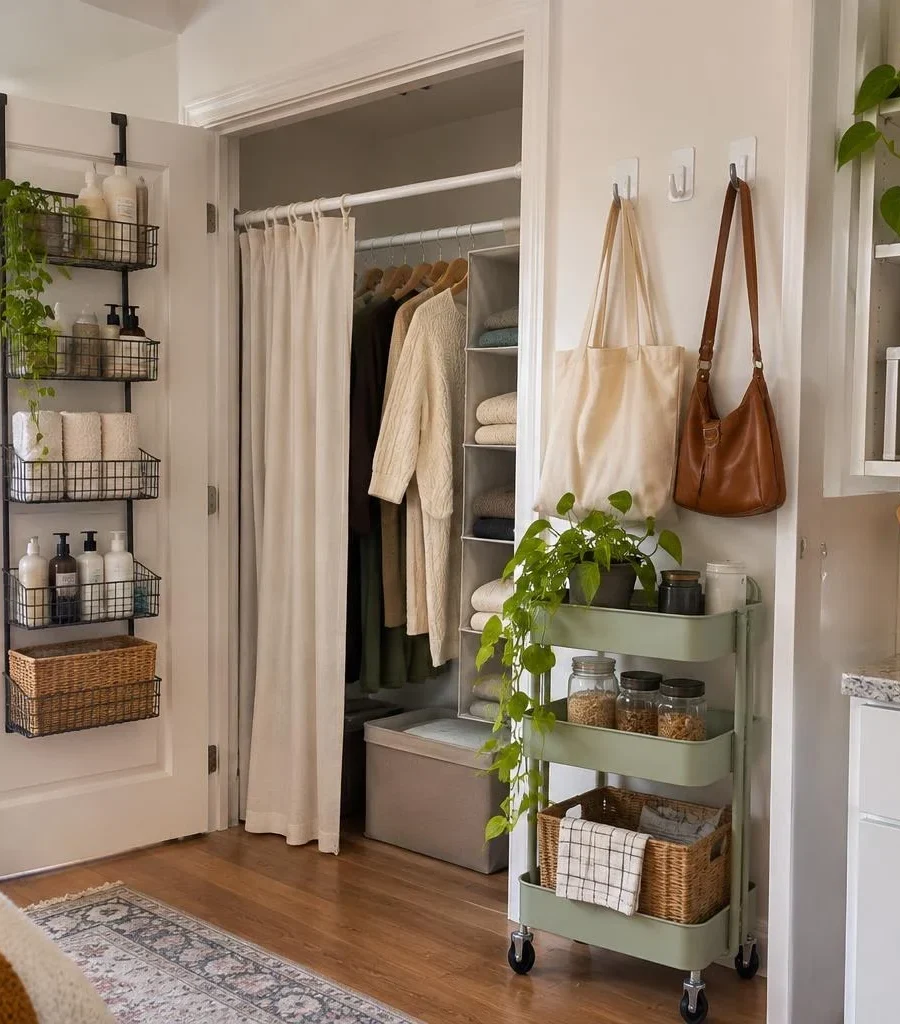
Add storage without drilling by using vertical and hidden space: an over-the-door rack, tension rods, removable hooks, shelf risers and a slim rolling cart. Measure first and follow the weight limit on every adhesive or tension product. Anchor tall furniture to the wall, but ask your landlord before making any holes.
Level: easy
You will need: over-the-door rack, tension rods, removable adhesive hooks, shelf risers, slim rolling cart, tape measure
Most rentals have too few cabinets and shelves, and a lease that bans holes in the walls. The usual fix is a drill, so you need other options.
Here are eight ways to add storage without a screw, mostly in the kitchen. Each one says what to measure and where weight limits matter.
in this guide
- Hang an over-the-door rack
- Use a tension rod as a cabinet divider
- Stick removable hooks inside cabinet doors
- Put magnets on the side of the fridge
- Park a slim rolling cart in a skinny gap
- Add shelf risers and turntables to cabinets
- Choose low shelves and anchor tall ones
- Keep cleaners and laundry pods in a lidded bin up high
Hang an over-the-door rack
An over-the-door rack hooks over the top edge of a door and hangs flat against it. Use it for foil, wraps, cleaning cloths, snacks or shoes. It fits a pantry door, a closet door or a bathroom door.
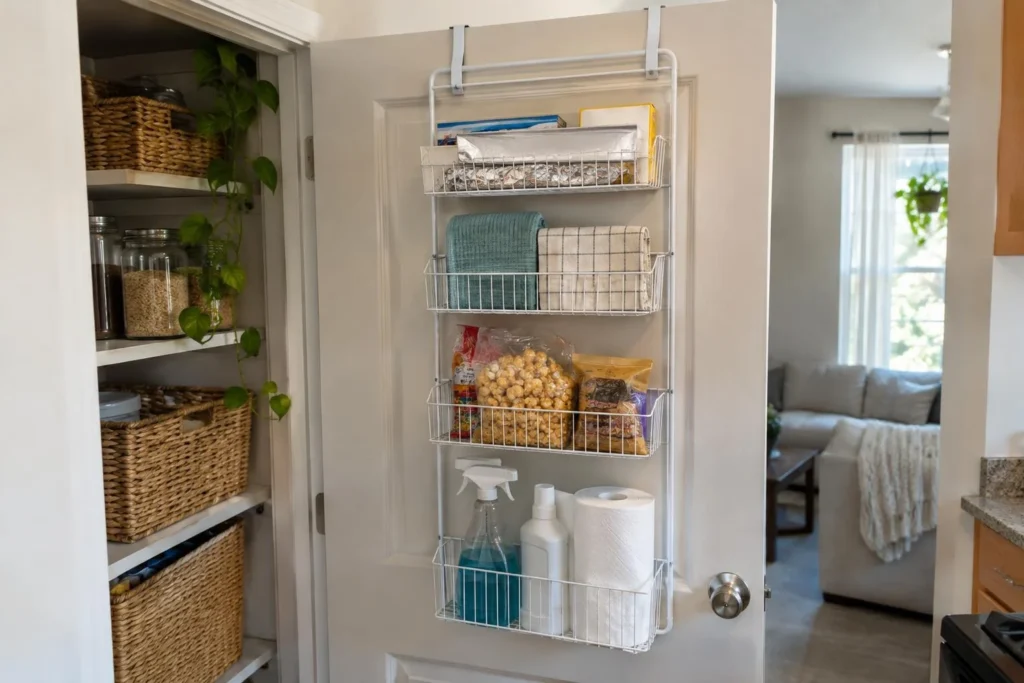
Measure the thickness of the door before you buy, since doors in rentals vary. Check that the door still closes with the rack on it, and that the items will not bump the wall or trim when the door swings open.
Put heavy things in the lower baskets and light things up high. Most racks list a weight limit, so read it before you load them.
Shop the idea: over-the-door rack on Amazon (for example, Simple Houseware or mDesign)
Renter note: Put a thin piece of felt where the rack hooks over the top edge of the door so it does not rub off paint.
Use a tension rod as a cabinet divider
A tension rod stays in place by pressing against two sides, so it needs no screws. Set one upright or sideways inside a kitchen cabinet and it works as a divider. Baking sheets, cutting boards and lids can stand on edge instead of piling up.
Measure the inside width of the cabinet and pick a rod that adjusts to that size. Twist it until it is snug, then tug it gently to check that it does not slip. For taller items, use two rods a few inches apart to make a slot.
Keep to light items. Thin pans, trays and boards are fine. A heavy cast iron skillet is not.
Renter note: Every tension rod has a weight limit on its package, so stay well under it. The rubber ends can mark painted or finished cabinet sides, so check the spot now and then.
Stick removable hooks inside cabinet doors
The inside of a cabinet door is unused space. A few removable adhesive hooks can hold measuring cups, oven mitts, a small cutting board or cleaning brushes, out of the way but easy to grab.

Wipe the spot clean and let it dry fully. Press each hook firmly for the time listed on the package, and wait before you hang anything on it. Keep the load light, because a door that swings often puts more stress on a hook than a still wall does.
Close the door with the items on it before you commit. A hook that is too thick will stop the door from shutting.
Shop the idea: removable adhesive hooks on Amazon (for example, Command)
Renter note: Follow the weight limit on the package. To remove a hook, pull the tab slowly and straight down along the surface so the paint or finish stays put. Test one hook first on textured or laminate cabinets, since the adhesive can lift the surface.
snug tip
Hang one hook first and leave it a day with a light item before you trust it with more.
Put magnets on the side of the fridge
If the side of your fridge is steel and exposed, it can hold a magnetic hook, a set of magnetic spice tins or a magnetic paper towel holder. You need no tape or tools.
Test with a plain magnet first, since some fridges have panels where magnets will not hold. Keep the load light so the magnets do not slide down over time, and stay away from vent areas that get warm.
Lift magnets off instead of sliding them, because sliding can scratch the finish.
Park a slim rolling cart in a skinny gap
A narrow gap beside the fridge or between a counter and a wall is often wasted. A slim rolling cart fits there and holds canned goods, oils or cleaning supplies, then rolls out when you need it. It also goes with you when you move.
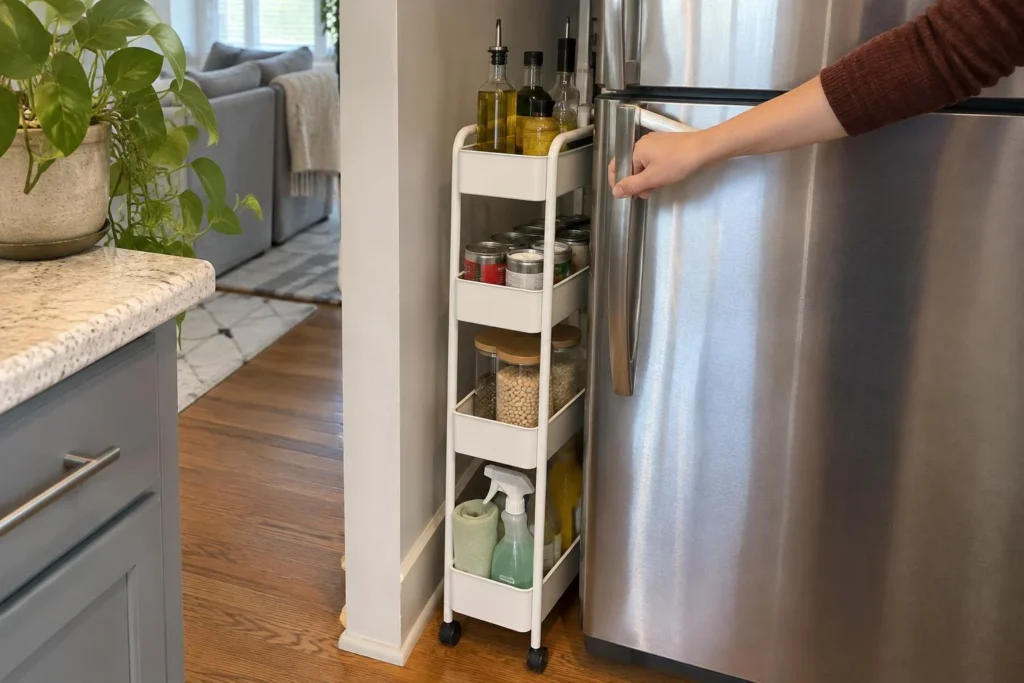
Measure the width at the narrowest point, including fridge handles and door swing, then measure the depth and height. Look for wheels that lock so the cart stays put while you take things off the shelves.
Keep it away from the stove, since heat and grease are hard on baskets and bins.
Shop the idea: slim rolling cart on Amazon (for example, Seville Classics or Simple Houseware)
snug tip
Put the heaviest items on the bottom shelf of the cart so it stays steady when you roll it.
Add shelf risers and turntables to cabinets
Cabinets in rentals often have empty air above the plates and bowls. A shelf riser adds a second level, so you can see and reach what is in the back. A two-tier turntable does the same for spices, oils and jars in a corner.

Measure the height between shelves and leave enough room to lift items out without tipping the ones above. Put daily items on the riser or the front of the shelf and rarely used items behind them.
Clear bins with handles work on lower shelves for packets, snacks and baking supplies, because you can pull the whole bin out.
Shop the idea: shelf risers on Amazon (for example, Simple Houseware or mDesign)
Choose low shelves and anchor tall ones
A freestanding shelf or bookcase adds storage without touching the wall. But tall, narrow furniture can tip, especially when it is loaded unevenly or when kids or climbing pets are around. The CPSC recommends anchoring tall shelves, dressers and bookcases to the wall.
If you can, pick low, wide pieces over tall, narrow ones. Put the heaviest items on the bottom shelves and keep the top light. If you want a tall piece, ask your landlord whether small anchor holes are allowed, since small holes can usually be patched.
Push the shelf flush to the wall and check that it does not rock before you load it.
Learn more: CPSC Anchor It: Prevent Furniture Tip-Overs
Renter note: Check your lease before drilling, and ask your landlord in writing if you want to anchor a tall piece.
Keep cleaners and laundry pods in a lidded bin up high
In a small home, cleaning products often sit on the floor or under the sink, where pets and kids can reach them. A lidded bin on a high shelf or inside a closed cabinet keeps them together and out of reach. It needs no tools.
Keep products in their original containers so the label and directions stay with them. Store laundry pods in a closed container too, since they can look like candy or a toy. Never mix cleaners, and never combine bleach with ammonia or other cleaners.
If a pet gets into something, call your vet or a pet poison hotline right away. Keep the product label handy so you can say what it was.
Learn more: ASPCA: Poisonous Household Products
Renter note: Latches, whether adhesive or screw-on, can mark cabinets, so ask your landlord before adding any. Otherwise use a lidded bin on a high shelf.
from our shop

Prefer vinyl labels? If you own a cutting machine such as a Cricut or Silhouette, we made a set of 70 pantry, baking and spice label words as cut files (SVG, DXF and PNG) in three styles.
Made by us · sold on Creative Fabrica · affiliate link
Where to start
Measure one door, one cabinet width and one skinny gap, and write the numbers on your phone so you can shop with them.
Then hang an over-the-door rack and put a few removable hooks inside a cabinet door. Move cleaners and laundry pods into a lidded bin on a high shelf. Leave the rest until you see what still feels crowded.
free printable checklist
No-Drill Storage Checklist
9 steps. Tick them off as you go (your ticks stay on this device), or print it and keep it where you do the job.
The Snug Nook · thesnugnook.com
Quick answers
How do I add storage to a rental without drilling?
Use the back of doors, the inside of cabinet doors and the empty air above shelves. Over-door racks, tension rods, removable hooks, shelf risers and rolling carts all work with no tools. Always check weight limits and your lease.
Do removable adhesive hooks damage walls?
They can pull off paint if the surface is dusty, rough or freshly painted, or if they are overloaded. Clean and dry the spot, follow the package directions and stay under the weight limit. To remove them, pull the tab slowly and straight down along the wall.
Are tension rods strong enough for kitchen storage?
They work for light items such as thin baking sheets, cutting boards and spray bottles. They are not made for heavy pots or pans. Check the weight limit on the package and tug the rod gently to make sure it is snug.
free for subscribers
Pantry labels that make it stick
Print, cut, stick. Plus occasional small-space tips. Unsubscribe anytime.