quick answer
Put the litter box in a quiet, low-traffic spot away from food and the washer, such as beside the toilet, on a closet floor with the door propped open, or in a cabinet enclosure that doubles as a side table. Measure the box plus room to step in and out, then add a mat and a small supply bin.
Level: easy
You will need: tape measure, door stopper, cabinet-style enclosure, folding screen, litter trapping mat, lidded bin
A litter box is big, it is always in use, and it has to go somewhere. In a small apartment, the usual answers get old fast: the middle of the living room, or a bathroom floor you have to step around. The best spot balances your cat’s comfort with your own need for floor space.
Below are eight places and setups that work in studios and one-bedrooms, most of them with no drilling. You will learn what to measure, how to hide the box without making your cat avoid it, and how to keep scoops, bags, and cleaners tidy and safe.
in this guide
- Start with a quiet corner away from food and appliances
- Tuck it beside the toilet or tub in the bathroom
- Use the floor of a closet, with the door held open
- Choose a cabinet-style enclosure that doubles as a side table
- Turn the bottom cube of a low bookcase into a litter nook
- Section off a studio corner with a folding screen
- Stop tracking with a mat and the right box shape
- Keep the scoop, bags, and cleaner together and out of reach
Start with a quiet corner away from food and appliances
Cats usually like a spot that is calm, easy to reach, and not in the middle of the action. Skip the area next to food and water bowls, the washer or dryer, and any hallway where people walk past all day. A corner with two solid walls often feels safest.
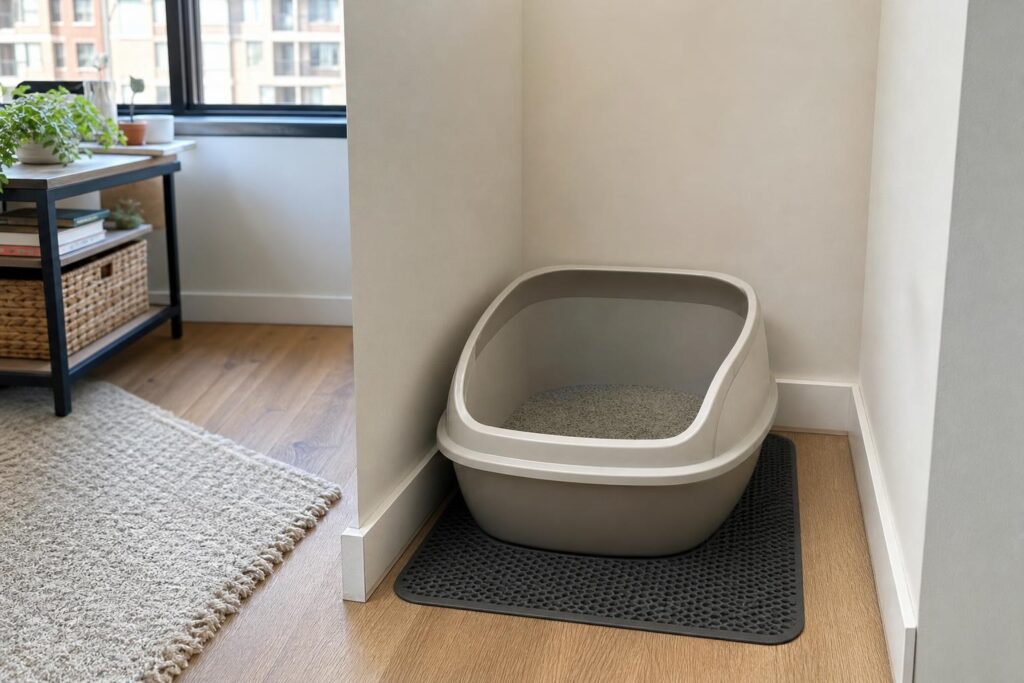
Before you move anything, measure the box length and width. Then measure each spot you are considering and leave room on the open sides so your cat can step in and out and you can scoop without squeezing. About a hand’s width beyond the box is a reasonable starting point.
Try the spot for a few days and watch. If your cat uses the box without fuss, keep it there. If your cat keeps skipping the box, move it before you buy anything to hide it.
Tuck it beside the toilet or tub in the bathroom
The bathroom is a common choice because the floor is easy to wipe and the door gives you privacy. In a small apartment, the narrow strip beside the toilet or tub often fits a box with room to spare.
Measure the floor strip first, and check that the door still opens fully. Keep the box away from the shower edge so the litter stays dry. Hold the door open a few inches with a wedge-style door stopper so your cat is never shut out.
Renter note: A wedge door stopper sits on the floor and needs no tools or drilling.
snug tip
If you move the box, shift it a foot or two at a time. Cats get attached to a spot, and small moves are easier for them than a sudden change.
Use the floor of a closet, with the door held open
A closet floor is dead space in many small apartments. A hall closet or a shallow bedroom closet can hold a box out of sight, which helps in a studio where everything is visible.
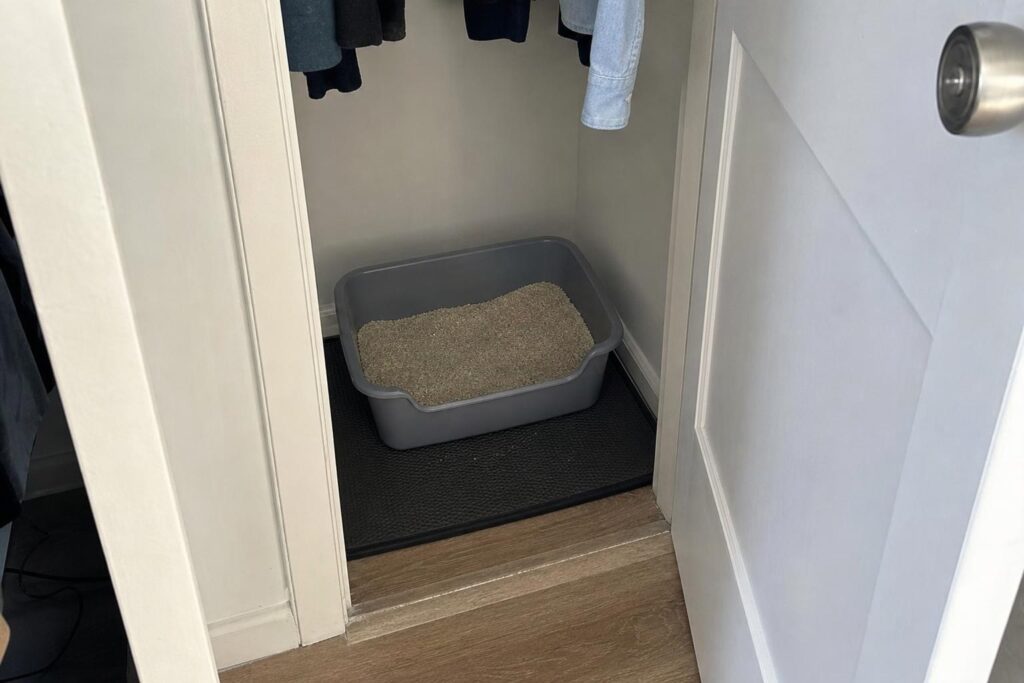
Clear the floor of shoes and bags, and set a washable mat or tray under the box to catch stray litter. Leave the door open a few inches so air moves and your cat can come and go. Never close a cat in with the box.
If the closet is already packed, our guide to small closet organization shows ways to free up the floor.
Renter note: Don’t take the door off its hinges unless your lease allows it. A floor stopper holds it open without any changes to the unit.
Choose a cabinet-style enclosure that doubles as a side table
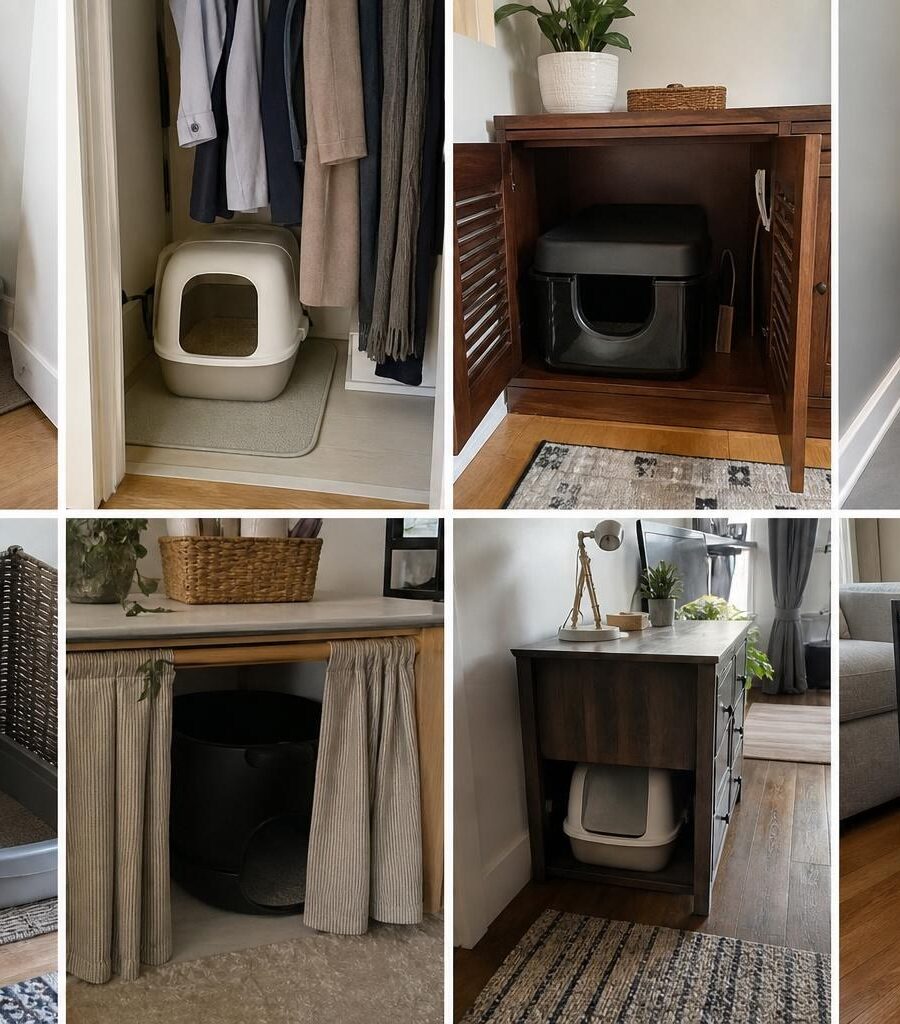
A litter box cabinet looks like a small credenza or bench, with a hole or door for your cat to enter. The top can hold a lamp, a few books, or a tray for keys, so one footprint does two jobs.
Measure the inside, not the outside. Your cat should be able to turn around easily, and the box should not press against the walls. Look for side vents or an open back so air can move through.
Some cats dislike enclosed boxes. Start with the door off or the opening wide, and let your cat get used to it before you close things in.
Shop the idea: litter box cabinet enclosure on Amazon
more checklists like this
Get new small-space checklists by email now and then. New subscribers also get our 90 printable pantry labels as a welcome gift.
Turn the bottom cube of a low bookcase into a litter nook
If you already own an open cube shelf or a low bookcase, the bottom cube can hold a box. Books, baskets, and plants go above it, and the box stays at floor level where your cat expects it.
Measure the cube opening against the box height and width. For privacy, hang a light fabric panel from a small tension rod inside the opening, and leave a gap at the bottom or side so air can move. Check the rod’s weight limit and keep the fabric light so nothing falls on your cat.
Tall shelves can tip, especially if a cat climbs them. Secure any tall bookcase to the wall with an anti-tip strap, following the product instructions.
Learn more: CPSC Anchor It: Prevent Furniture Tip-Overs
Renter note: Anti-tip straps need a screw in the wall, so check your lease or ask your landlord first. Tension rods can mark painted or laminate surfaces, so choose one with rubber tips and stay under its weight limit.
Section off a studio corner with a folding screen
In a studio, the problem is often sight lines rather than floor space. A free-standing folding screen can close off a corner so the box is out of view without building anything.
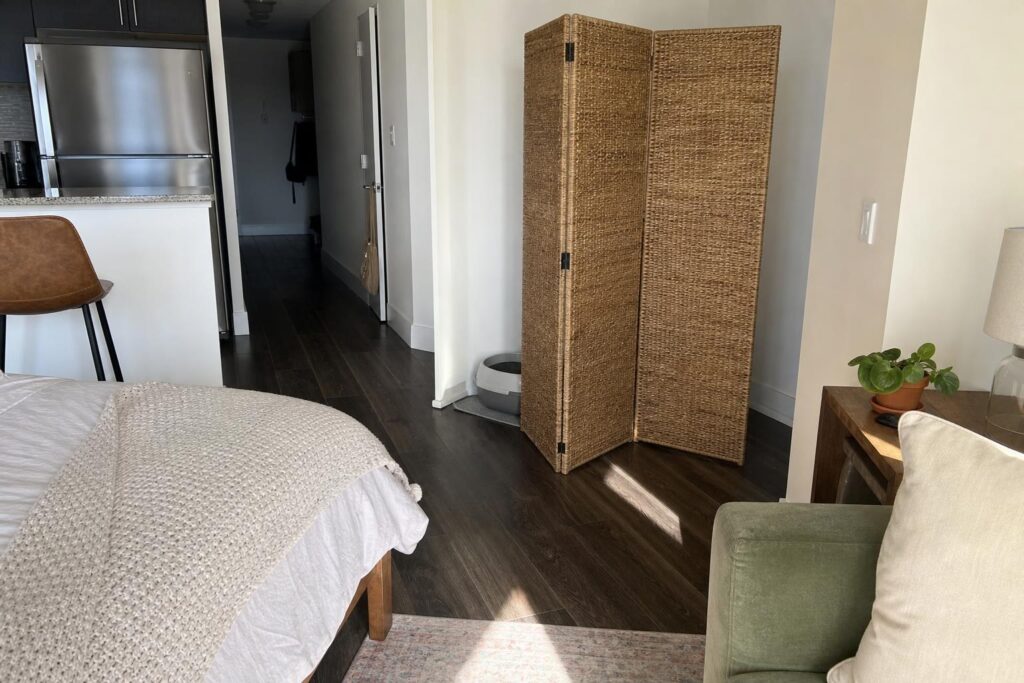
Place the box in a corner as far as you can from your bed and kitchen area. Set the screen at an angle and leave a gap on one side so your cat can walk in and air can flow. Measure the screen’s footprint so it does not block a door or walkway.
Pick a screen with a stable base. If your cat likes to climb, a heavier or wider one is less likely to tip.
Shop the idea: folding privacy screen on Amazon
Stop tracking with a mat and the right box shape
In a small apartment, litter on the floor shows up everywhere. A litter-trapping mat placed under and in front of the box catches grains as your cat steps out. Pick one wide enough for both front paws to land on it.
Shake out or vacuum the mat on a regular schedule. Keep a small dustpan and brush close by so a quick sweep takes seconds.
A box with high sides or a top entry can also cut down on scatter. Very young, older, or stiff cats may find tall sides hard to climb over, so watch how your cat handles it.
Shop the idea: litter trapping mat on Amazon
snug tip
Scoop daily. A clean box is the best defense against smell and against a cat who starts going somewhere else.
Keep the scoop, bags, and cleaner together and out of reach
Supplies spread out fast. Set a lidded bin or small basket beside the box for waste bags and extra litter. A scoop is light, so a removable adhesive hook near the box can hold it. Check the package for the hook’s weight limit.
Store the litter jug in a lidded bin or on a low closet shelf so dust stays contained and the jug is not in your way.
Keep cleaning products on a high shelf or in a closed cabinet, away from your pets. Many household cleaners are harmful to animals. Follow the label, and never mix cleaning products together.
Learn more: ASPCA: Poisonous Household Products
Shop the idea: lidded storage bin on Amazon (for example, Sterilite or Rubbermaid)
Renter note: Use removable adhesive hooks only on clean, smooth surfaces and stay under the weight limit listed on the package.
from our shop

Want labels for the pet station? We made a printable set of 52 labels for food bins, treat jars, toys, leashes and grooming supplies, plus blanks to fill in.
Made by us · sold on Creative Fabrica · affiliate link
Where to start
This weekend, measure your litter box and the two or three spots you are considering. Pick the quietest one, away from food, water, and appliances, and leave the box there for a few days to see how your cat reacts.
Once the spot works, add a litter-trapping mat and set a small bin or basket nearby for bags and the scoop. Only then think about hiding the box with a cabinet, screen, or bookcase cube, so you buy what fits rather than guess.
free printable checklist
Litter Box Setup Checklist
9 steps. Tick them off as you go (your ticks stay on this device), or print it and keep it where you do the job.
The Snug Nook · thesnugnook.com
Quick answers
Can I put a litter box in the bathroom of a small apartment?
Yes, as long as your cat can always get in. Prop the door open with a wedge stopper and keep the box away from splashes near the tub or shower. If guests use the bathroom often, a closet or screened corner may feel more private.
How do I hide a litter box in a studio apartment?
A cabinet-style enclosure, a folding screen angled across a corner, or the bottom cube of a low shelf all hide the box without building anything. Leave an open side or gap so your cat can enter easily and air can move.
How far should the litter box be from my cat’s food?
Cats usually prefer to eat away from where they go. Put as much distance between them as your layout allows, ideally in different parts of the room or in different rooms. If your cat starts avoiding the box or the food, try moving one of them.
join the snug nook list
New checklists in your inbox
Occasional small-space checklists and tips, plus 90 printable pantry labels as a welcome gift. Unsubscribe anytime.