quick answer
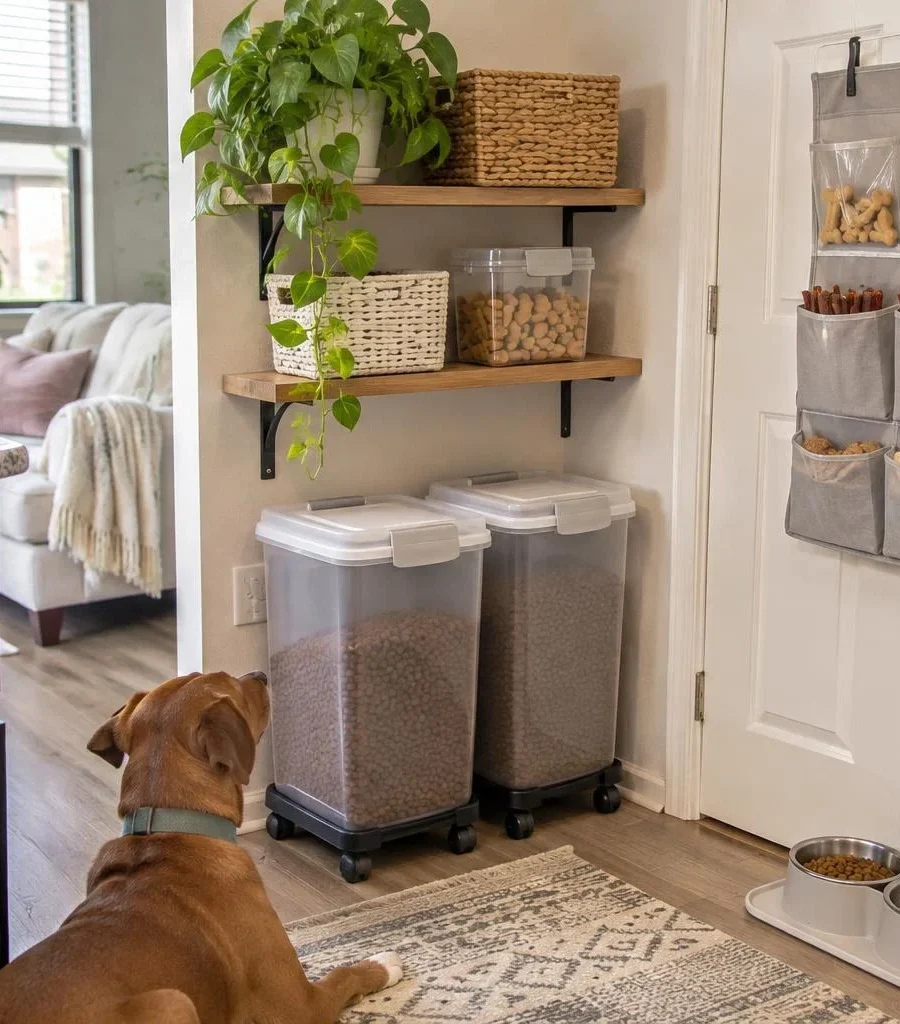
Keep dog food in its original bag, put the bag in an airtight bin, and store it in a cool, dry spot near the feeding area. The bin can go under a bench, on a rolling base, or on a low anchored shelf. Store cleaning products well away from the food.
Level: easy
You will need: airtight pet food bin, rolling base for bins, over-the-door organizer, anti-tip furniture straps, tape measure, small lidded container
A big bag of kibble does not fold up. In a small home it slumps in a corner, gets knocked over, and is easy for a determined dog to tear open. If the closet is already full, the bag ends up wherever it happens to fit.
Below are nine ways to store dry food, wet food, and treats so they stay fresh and mostly out of sight. Most need no drilling and no new furniture. Measure your spot and your bag first, so the bin fits on the first try.
in this guide
- Pick a cool, dry spot near the bowls
- Keep the food in its bag, and put the bag in an airtight bin
- Slide the bin under a bench or entryway console
- Put the bin on a rolling base
- Use a low shelf, and anchor it if it is tall
- Give pet supplies their own cabinet, away from cleaners
- Fill a small container for the week
- Hang treats and gear on the back of a door
- Stack cans and cover the open one
Pick a cool, dry spot near the bowls
Dry food usually keeps best somewhere cool, dry, and out of direct sun. Skip the spot next to the stove, a radiator, a sunny window, or a damp corner by the washer.
Look at the floor and low shelves near the feeding area. Find a spot that is within a few steps of the bowls but not in your main walkway. Measure its width, depth, and height, and save the numbers in your phone.
Keep the food in its bag, and put the bag in an airtight bin
Pouring kibble straight into a bin looks tidy, but the original bag has the best-by date, the lot number, and the name of the food. You will want those if you ever have a question about the food. Leave the food in the bag and set the whole bag inside a bin with a tight lid.
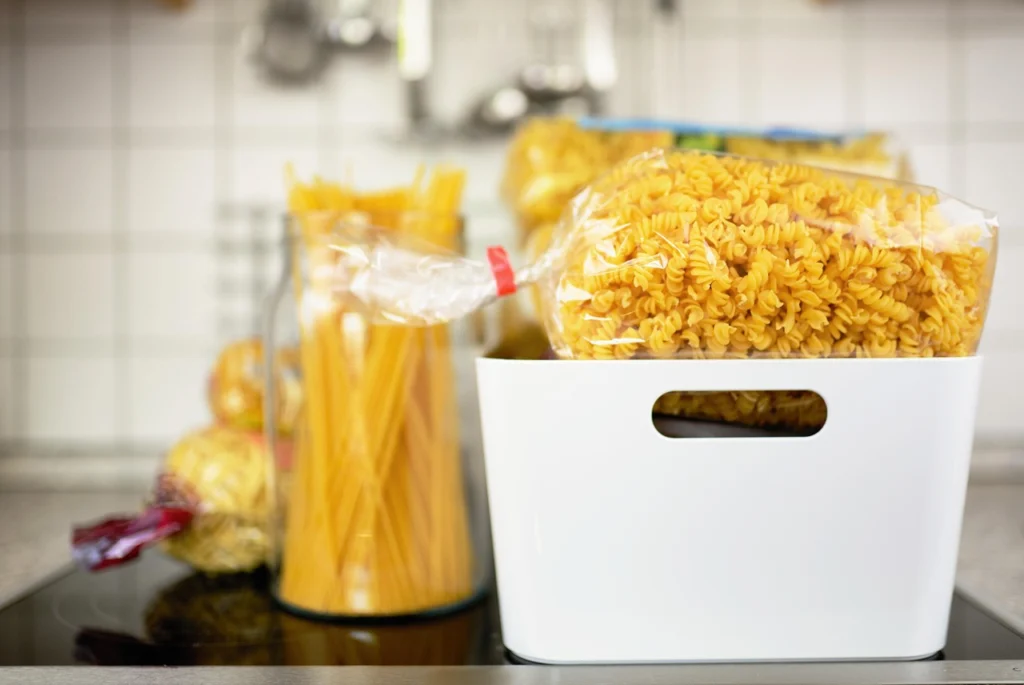
Roll the top of the bag down, clip it, and lower it into the bin. The bin limits air, keeps pests out, and blocks curious noses, while the bag keeps the label details.
To pick a size, measure the height and width of a full bag. Bags bulge in the middle, so leave a little extra room. A bin with a latching lid is harder for a dog to pop open than one that only presses on.
Shop the idea: airtight pet food bin on Amazon (for example, IRIS USA or Gamma2)
snug tip
Wash and dry the bin fully before you add a new bag. Old crumbs and damp spots can spoil fresh food.
Slide the bin under a bench or entryway console
Furniture you already own can hide the bin. Many entryway benches, consoles, and narrow tables have a gap underneath that is tall enough for a lidded container.
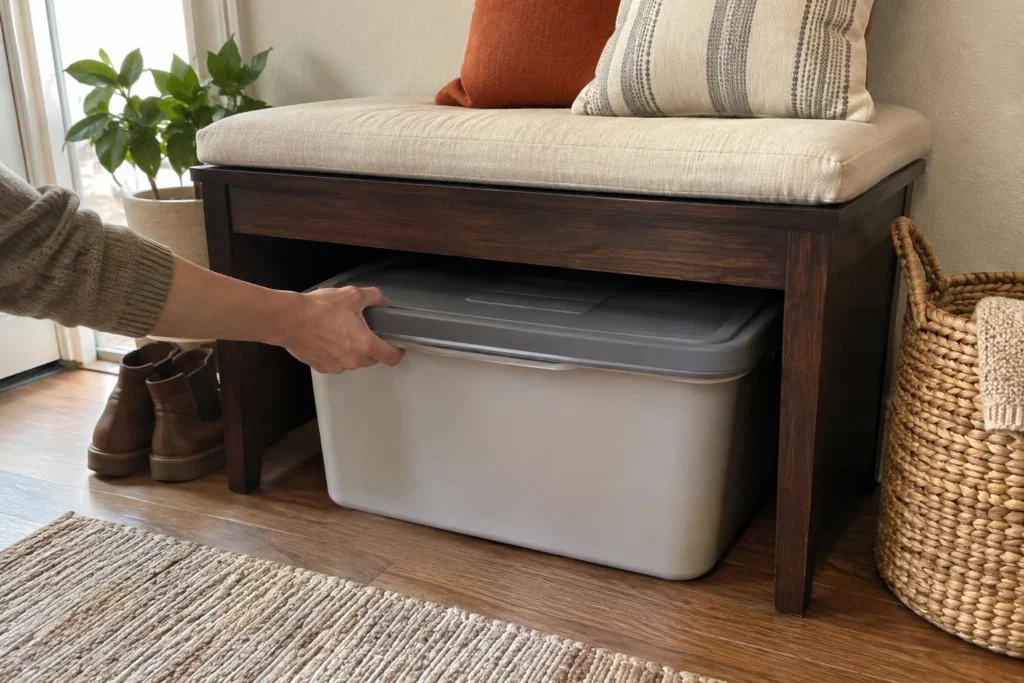
Measure from the floor to the underside of the piece, then compare it with the bin’s height with the lid on. Check that you can still open the lid, or pick a bin with a side opening. If the gap is short, a wider, lower bin often fits when a tall one will not.
A basket or curtain in front can hide the bin, as long as you can still reach the food at every feeding.
Put the bin on a rolling base
A full bag is heavy to drag across a floor, and dragging can scratch it. A low rolling base lets you slide the bin out for scooping and push it back afterward.
Measure the bin’s footprint and choose a base a little bigger, with wheels that suit your flooring. Test it empty first, then loaded. If your floor is uneven, the bin may roll on its own, so locking wheels are worth having.
Shop the idea: rolling base for bins on Amazon
Renter note: Check the base’s weight limit against a full bin, and use felt pads or soft wheels to protect hardwood floors.
Use a low shelf, and anchor it if it is tall
If you have a bookcase or storage unit, the bottom shelf can hold the food bin. Heavy items low down keep the unit more stable than heavy items up high. Do not put the bag on a top shelf, where lifting it is awkward and a fall can hurt.
A tall unit can still tip, especially if a dog or child climbs or pulls on it. Anchoring tall furniture to the wall is the standard safety advice. If you cannot drill, choose a short, wide shelf that sits low and steady.
Learn more: CPSC Anchor It: Prevent Furniture Tip-Overs
Shop the idea: anti-tip furniture straps on Amazon (for example, Safety 1st)
Renter note: Wall anchors need screw holes. Check your lease and ask your landlord before drilling. If drilling is not allowed, use a short, wide shelf instead.
more checklists like this
Get new small-space checklists by email now and then. New subscribers also get our 90 printable pantry labels as a welcome gift.
Give pet supplies their own cabinet, away from cleaners
If you have a lower cabinet, make it the pet station. Food, scoop, bowls, and treats can live together, so feeding takes one stop.
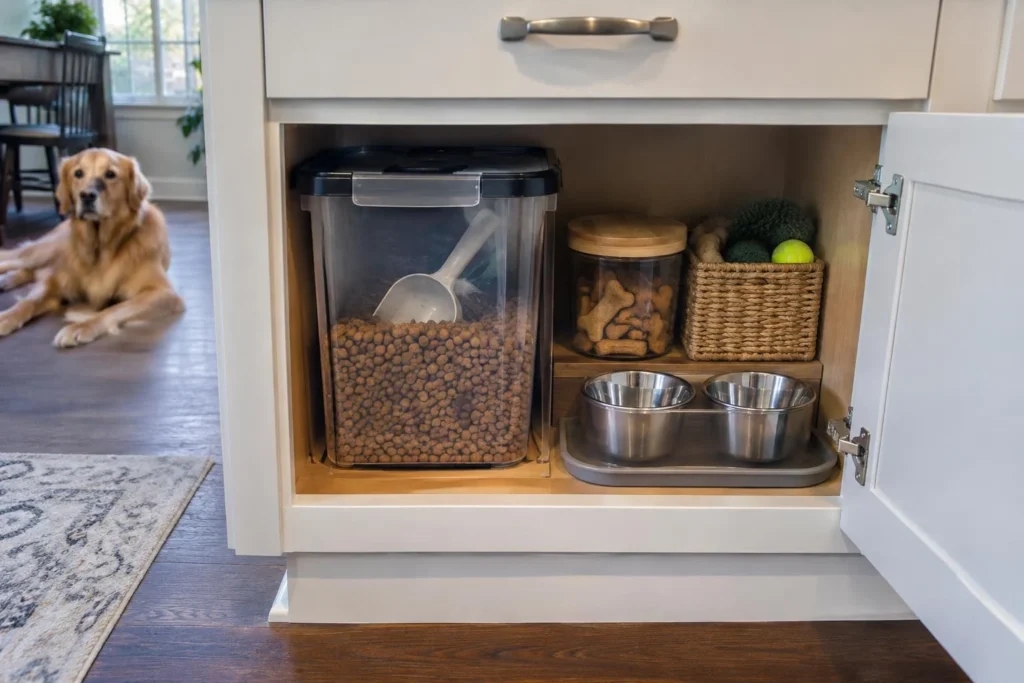
Keep cleaning products somewhere else. Cleaners, laundry pods, and bleach are dangerous to pets, so store them well apart from the food and out of your dog’s reach. Never mix cleaning products, and keep each one in its original container.
If your dog gets into something, call your vet or an animal poison control line right away.
Learn more: ASPCA: Poisonous Household Products
snug tip
Put a small label such as “dog” on the cabinet door, so guests and pet sitters know where the food is.
Fill a small container for the week
A big bin is awkward to open at every feeding. Keep the large bag stored away and fill a small lidded container with about a week of food. Put that one near the bowls.
Use a clean, dry container that closes tightly. Refill it only when it is nearly empty, and wipe it dry first. That way old kibble does not sit at the bottom forever.
A scoop that lives in the container saves you from digging through drawers and keeps portions steady.
Hang treats and gear on the back of a door
Treats, poop bags, a leash, and a brush take up more room than you expect. The back of a door is unused space, and a pocket organizer gives each item its own slot.
Pick a closet or pantry door that your dog cannot push open. Keep treats in sealed bags or small lidded jars in the upper pockets, out of nose height. Use the lower pockets for the leash and brush.
Check the organizer’s weight rating and stay under it.
Shop the idea: over-the-door organizer on Amazon (for example, Simple Houseware or mDesign)
Renter note: Over-the-door organizers need no drilling, but check that the door still closes fully and that the hooks do not mark the door edge.
Stack cans and cover the open one
Wet food comes in cans or trays that stack well. A single low shelf, or a pair of stacked bins, keeps them in one block and shows you what is left.
Put the oldest ones in front. When you open a can, cover the leftovers with a tight lid made for pet food cans and keep it in the fridge. Write the opening date on a piece of tape, and follow the storage time on the label.
from our shop

Want labels for the pet station? We made a printable set of 52 labels for food bins, treat jars, toys, leashes and grooming supplies, plus blanks to fill in.
Made by us · sold on Creative Fabrica · affiliate link
Where to start
This weekend, measure your best spot and your current bag. Write both numbers down before you shop.
Then clear a low shelf or the space under a bench, and move any cleaning products out of that area. If you already have a bin, set up the bag-in-bin system now and use it for a week.
free printable checklist
Dog Food Storage Checklist
9 steps. Tick them off as you go (your ticks stay on this device), or print it and keep it where you do the job.
The Snug Nook · thesnugnook.com
Quick answers
Should I pour dog food into a container or keep it in the bag?
Keep the food in its original bag and put the whole bag inside an airtight bin. The bag holds the best-by date and lot number. The bin protects the food from air and pests, and from your dog.
Where is the best place to store dog food in a small apartment?
Choose a cool, dry spot away from sun, heat, and damp, such as under a bench or on a low shelf. Keep it close to the feeding area so it is easy to use, and away from cleaning products.
How do I keep my dog out of the food bin?
Use a bin with a latching lid and store it in a closed cabinet or closet. Close the lid firmly after each scoop. Anchor any tall shelf, and use a rolling base only if the bin stays put.
join the snug nook list
New checklists in your inbox
Occasional small-space checklists and tips, plus 90 printable pantry labels as a welcome gift. Unsubscribe anytime.