quick answer
Clear out old toys first and set a one-in-one-out rule so new ones have somewhere to go. Keep one or two bins of toys out, and store the rest under the bed or on a closet shelf. Label bins with pictures, and anchor any tall shelf to the wall.
Level: easy
You will need: donate bag, clear stackable bins, under-bed storage bins, over-the-door organizer, removable labels, furniture anchor kit
Christmas can bring a lot of toys in one morning, and a small apartment has no spare room for them. Without a plan, they end up on the couch, under the table, and in the middle of the floor. Space is easiest to make before the gifts arrive, but the steps below also work the week after.
These 8 ideas cover clearing out old toys, setting a limit, rotating what stays out, and using space you already have: under the bed, behind a door, and on a closet shelf. Most need no drilling. The one that might is marked.
in this guide
- Start toy storage after Christmas with a donate bag
- Use a one-in-one-out rule for new toys
- Set up a landing basket for the first week
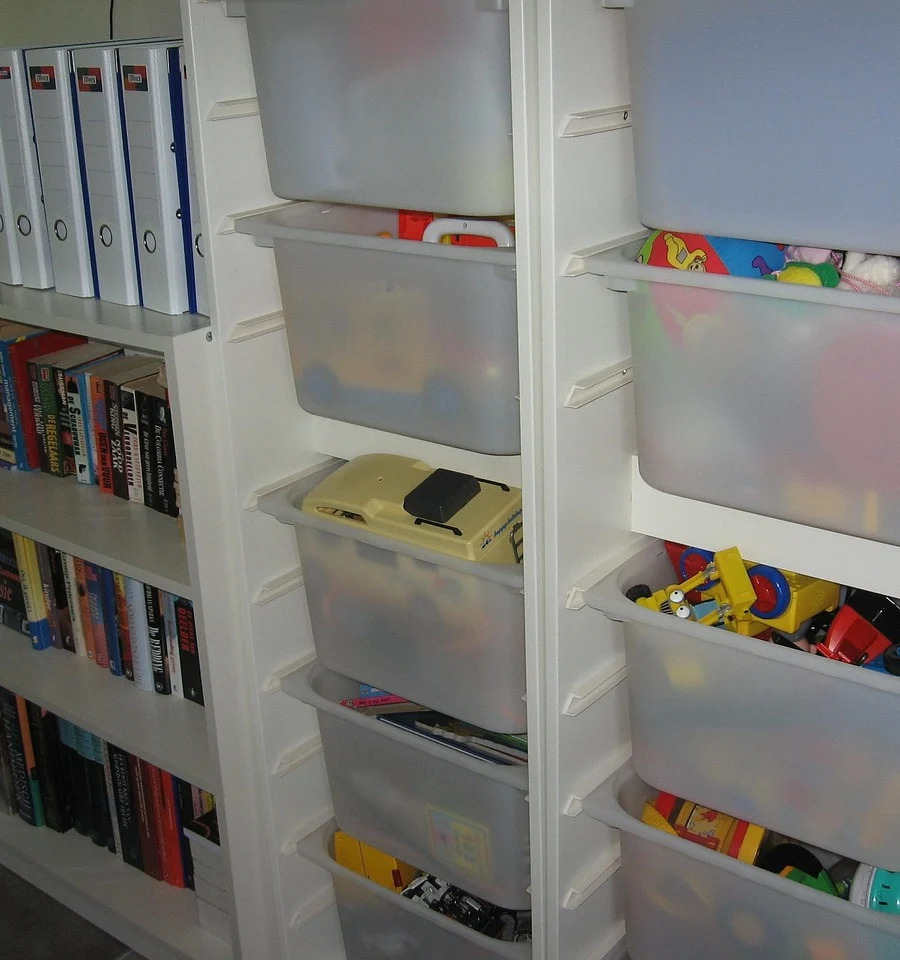
- Rotate toys with a few lidded bins
- Slide flat bins under the bed
- Hang an over-the-door organizer for small toys
- Add picture labels so kids can put things away
- Anchor tall shelves and skip heavy-lid toy chests
Start toy storage after Christmas with a donate bag
The easiest toy to store is one you no longer keep. Do this before Christmas if you can, while shelves and bins still have room. Even a small clear-out makes space for what is coming.
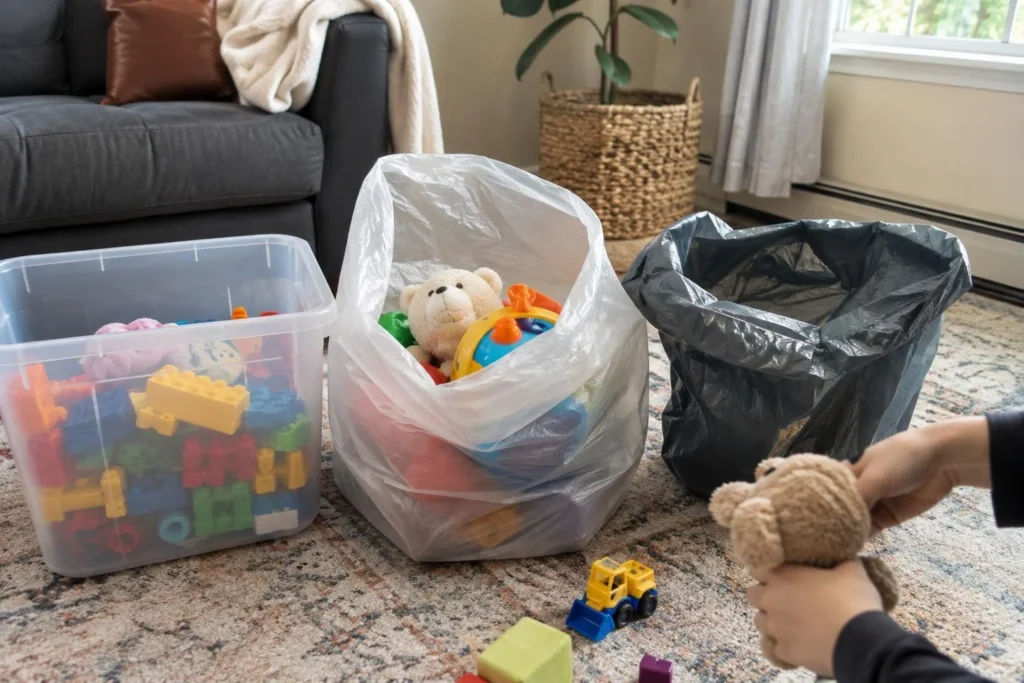
Set up three spots: keep, donate, and toss. Go through one bin or shelf at a time and pull out toys that are outgrown, broken, or missing pieces. Let your child choose a few toys to give away.
Put the donate bag by the front door so it leaves on your next errand. Check what your local donation spot accepts first, since some places will not take broken toys or sets with missing parts.
Use a one-in-one-out rule for new toys
A one-in-one-out rule stops the total from creeping up. When a new toy comes in, an older one goes out. Without it, the storage you set up fills again.
Explain it to kids in plain terms: the bins are only so big, and every toy needs a spot. Let them pick which toy leaves, so the decision is theirs.
After a big haul, wait a few days. Let the new toys get played with, then ask which older toys have been ignored. Those are usually the ones to pass along.
Set up a landing basket for the first week
The first days after Christmas are the messiest. A landing basket gives new toys one place to go while you decide where they belong. A laundry basket or a large open bin you already own works.
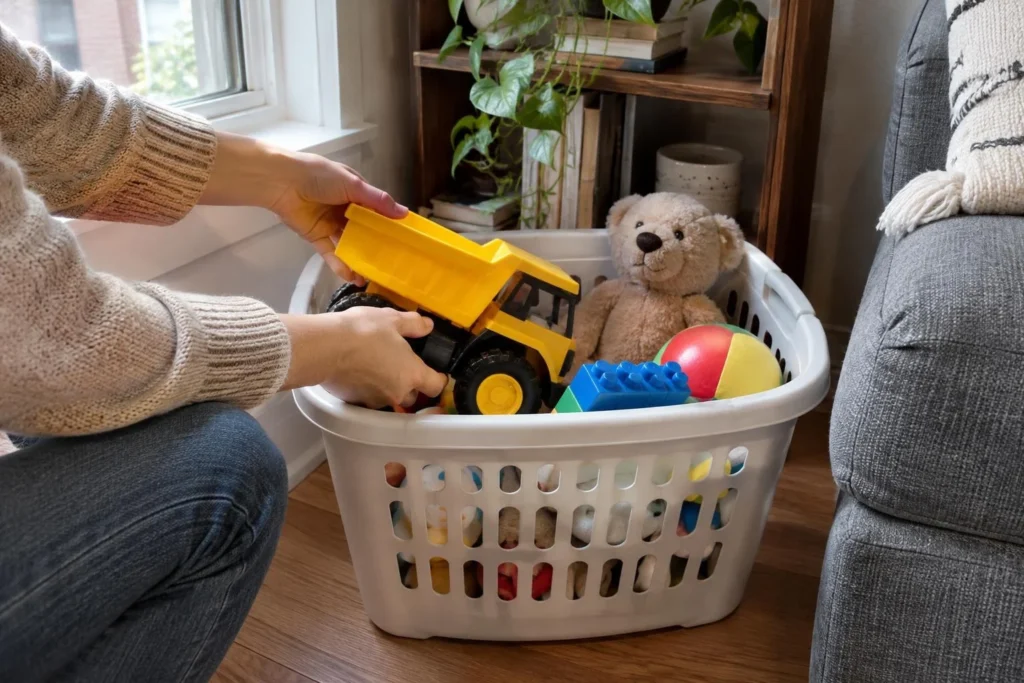
Keep it in a corner of the living room or the bedroom closet, and put new toys in it when nobody is playing with them. Once a day, or at the end of the week, sort it with the one-in-one-out rule.
You also see which toys actually got played with. Use that list to choose what goes into the rotation bins.
Rotate toys with a few lidded bins
In toy rotation, only some toys are out at a time and the rest wait in bins on a closet shelf or in another storage spot. Swap a bin every week or two. Older toys feel new again, and the floor stays clear.
Start with two or three bins. Sort toys by type, such as building toys and cars. Keep one bin out and put the others away. Write the swap date on a piece of tape on each lid.
If you have a dog or cat, use bins with lids and keep small pieces in a closed bin on a high shelf. Pets and young children can chew or swallow small parts.
Shop the idea: clear stackable bins on Amazon (for example, Sterilite or IRIS USA)
snug tip
Keep the bin that is out in the same spot every time. Kids learn where to find it, and swapping bins takes a minute.
more checklists like this
Get new small-space checklists by email now and then. New subscribers also get our 90 printable pantry labels as a welcome gift.
Slide flat bins under the bed
The space under a bed often goes unused in a small bedroom. Shallow, flat bins hold large sets, stuffed animals, and toys that come out only part of the year.
Measure the gap between the floor and the lowest part of the bed frame before you buy anything. Rails, slats, and legs all change how much room you have. Bins with wheels or a pull handle are easier for kids to reach.
Use these bins for the toys that are out of rotation. They stay close but out of sight.
Shop the idea: under-bed storage bins on Amazon (for example, Sterilite or IRIS USA)
Renter note: Wheels can scratch wood floors. Test on a hidden spot first, or choose bins without wheels if you have hardwood.
snug tip
Before you buy under-bed bins, check which side of the bed you can slide them out from. A wall or nightstand on one side can block them.
Hang an over-the-door organizer for small toys
The back of a bedroom or closet door suits small pieces. A clear over-the-door organizer with pockets holds figures, small cars, and craft supplies where you can see them and off the floor.
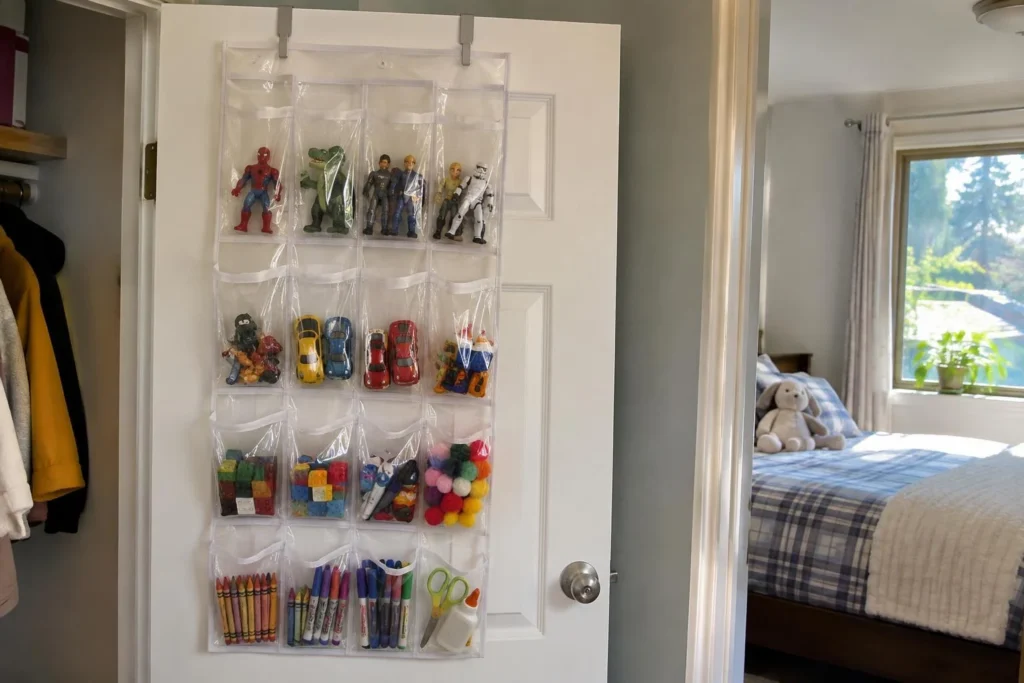
Check that the door still closes with the organizer on it. Measure the thickness of the door at the top edge, since doors vary, and pick an organizer with hooks that fit.
Put the pockets at kid height for the toys they use most, and the higher pockets for things you want to hand out yourself.
Shop the idea: over-the-door organizer on Amazon (for example, Simple Houseware)
Renter note: Over-the-door hooks need no drilling, but check the weight limit on the package and do not overload the pockets.
Add picture labels so kids can put things away
Young kids cannot read a word label, but they can match a picture. A picture on each bin shows where cars go and where blocks go, so cleanup goes faster and you do less of it.
Take a photo of the toys inside, or cut a picture from the box. Print it and tape it to the front of the bin. Add a word under it for older kids who are learning to read.
Use clear tape or a removable label. When you change what goes in a bin during rotation, you can swap the picture without leaving marks.
Renter note: Use removable labels or low-tack tape on bins, not on painted walls or furniture you do not own.
Anchor tall shelves and skip heavy-lid toy chests
New toys often mean more shelves. If you add a tall bookcase or dresser for toys, anchor it to the wall, because kids climb and tall furniture can tip. Low, wide shelves are safer when you have the choice.
Toy chests with heavy lids are a risk too, since a lid can slam on small fingers. Choose open bins or a toy chest without a lid, or one with a lid support that holds the lid open in any position.
To anchor a piece, find the studs behind the wall, then use the strap or bracket that comes with the furniture or a separate anchor kit. Follow the directions for your wall type.
Learn more: CPSC Anchor It: Prevent Furniture Tip-Overs
Shop the idea: furniture anchor kit on Amazon (for example, Dreambaby or QuakeHold)
Renter note: Anchoring means small screw holes in the wall, so check your lease and ask your landlord before you drill. If you cannot anchor, use low shelves instead of tall ones.
from our shop

Want the kids to put toys back on their own? We made 61 printable picture labels for toy bins, baskets and drawers: a cute picture and a big, clear word, so even kids who can’t read yet know where each toy goes.
Made by us · sold on Creative Fabrica · affiliate link
Where to start
Fill one donate bag, ideally before the gifts arrive. Pick one bin or shelf, sort it into keep, donate, and toss, and put the bag by the door. Then decide on your one-in-one-out rule and tell your kids.
Next, pick a landing spot for the new toys. A basket in the closet is enough. If you plan to use under-bed bins or an over-the-door organizer, measure the space now so you know what fits before you shop.
free printable checklist
Toy Storage Reset Checklist
9 steps. Tick them off as you go (your ticks stay on this device), or print it and keep it where you do the job.
The Snug Nook · thesnugnook.com
Quick answers
How do I store toys in a small apartment with no closet?
Use space under the bed, behind a door, and under or beside the couch. Flat under-bed bins and an over-the-door organizer hold a lot. A low shelf with open bins can work as a toy corner in a living room.
How many toys should be out at one time?
There is no fixed number, but a good starting point is what fits in one or two bins. Keep the rest in rotation and swap every week or two. If cleanup feels like a big job, you probably have too many out.
What should I do with all the toy boxes and packaging?
Flatten and recycle most of it as soon as the toy is opened, following your local recycling rules. Keep a box only for a short time if you may need to return the toy. For sets with many small pieces, a small lidded bin works better than the original box.
join the snug nook list
New checklists in your inbox
Occasional small-space checklists and tips, plus 90 printable pantry labels as a welcome gift. Unsubscribe anytime.