quick answer
In a freezer kept at 0 °F, most food keeps its best quality for 1 to 12 months: bacon about 1 month, soups and leftovers 2 to 3 months, ground meat 3 to 4 months, steaks and roasts 4 to 12 months, and a whole chicken up to a year. Food frozen at 0 °F stays safe longer than that; the times are about taste and texture.
Every freezer has one: a foil-wrapped something at the back, no label, no date. Is it still good? Most of the time the honest answer is “safe, but maybe not tasty anymore,” and the only way to know is to keep track of what went in and when.
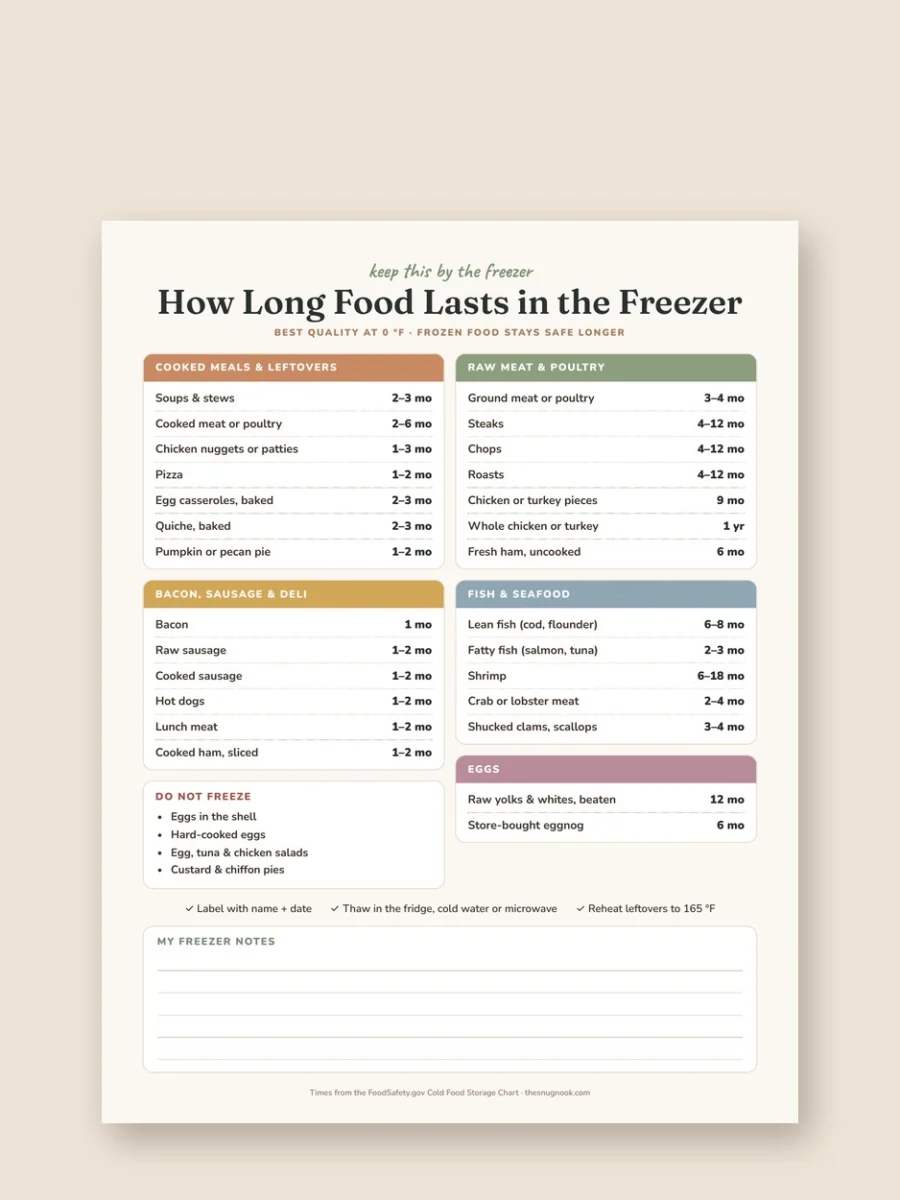
Below is a one-page chart of freezer times for the foods most of us actually keep, based on the FoodSafety.gov cold food storage chart. You can save it as a pin, print it in full size with room for notes, tape a small copy to the freezer door, or keep it on your phone for grocery runs.
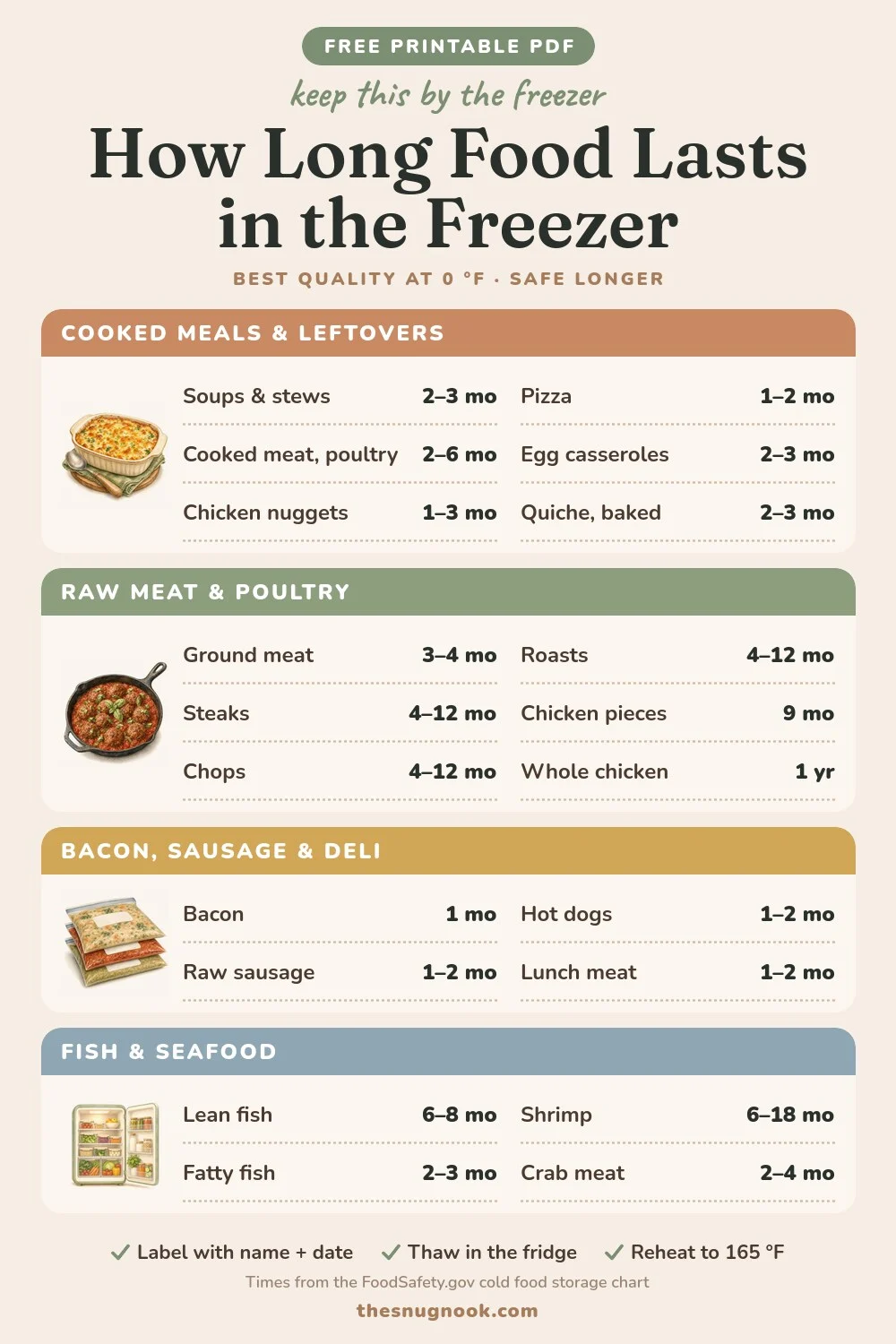
free printable
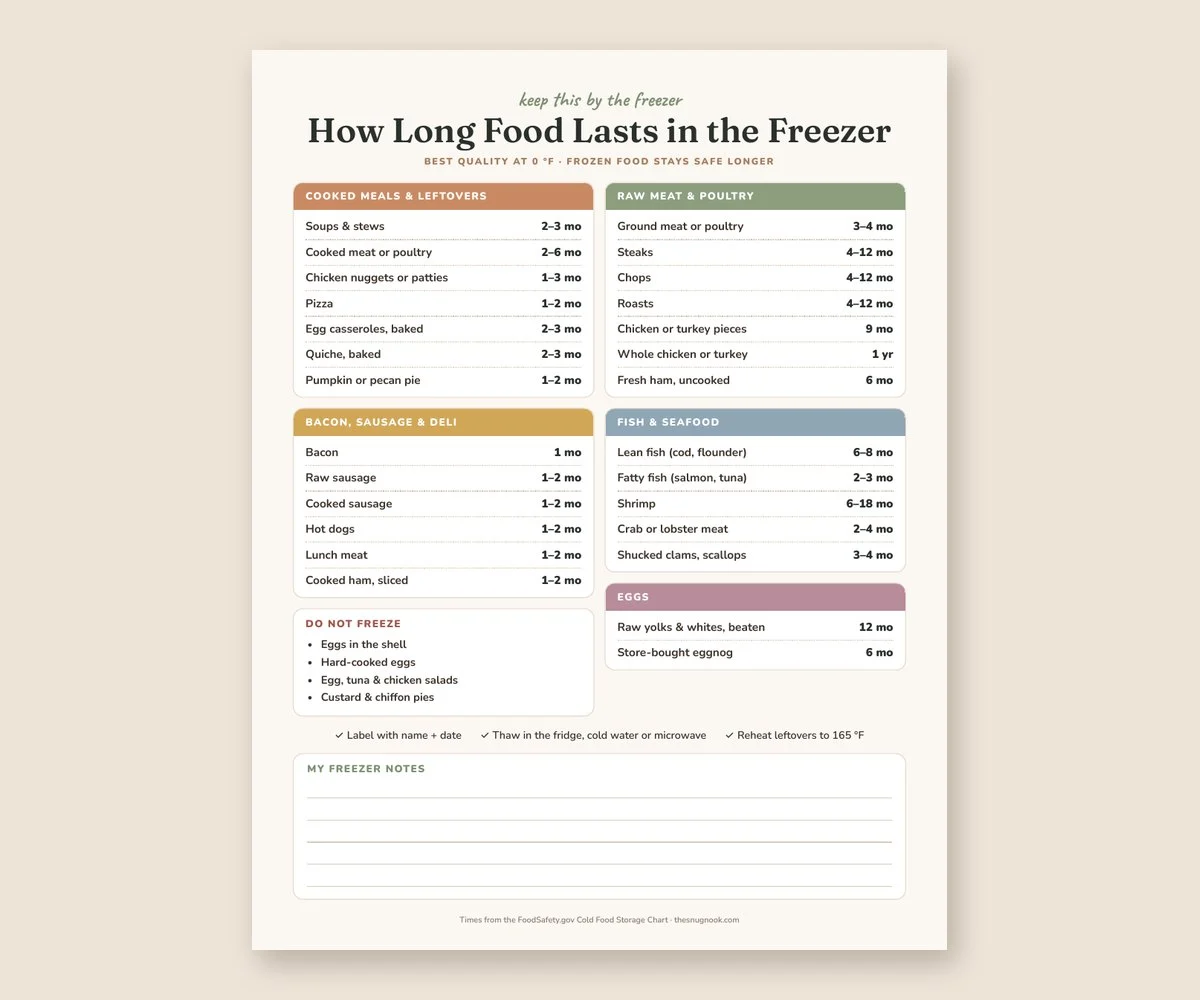
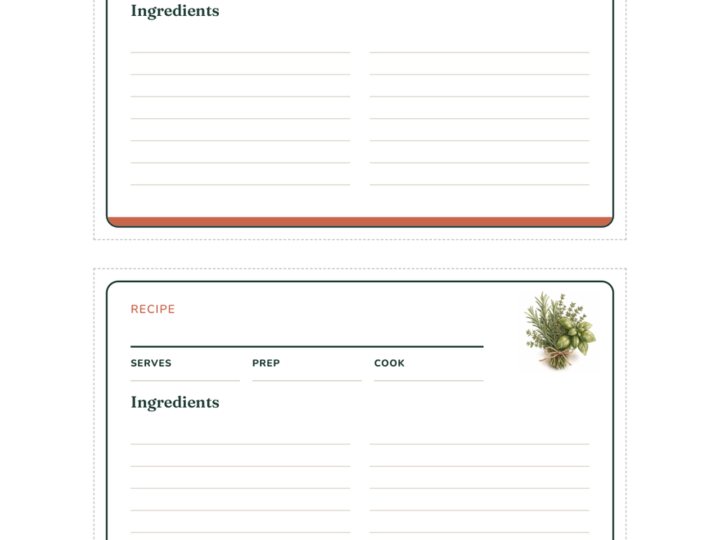
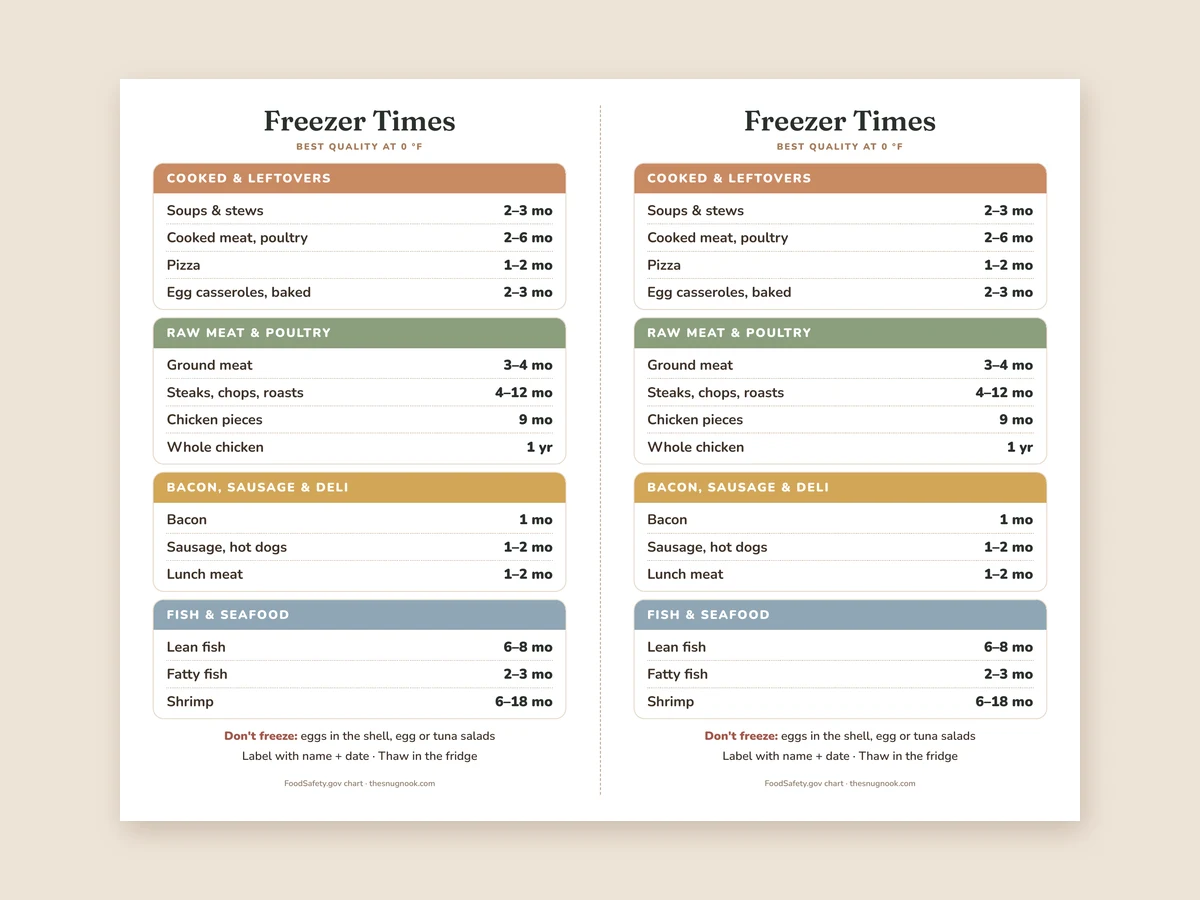
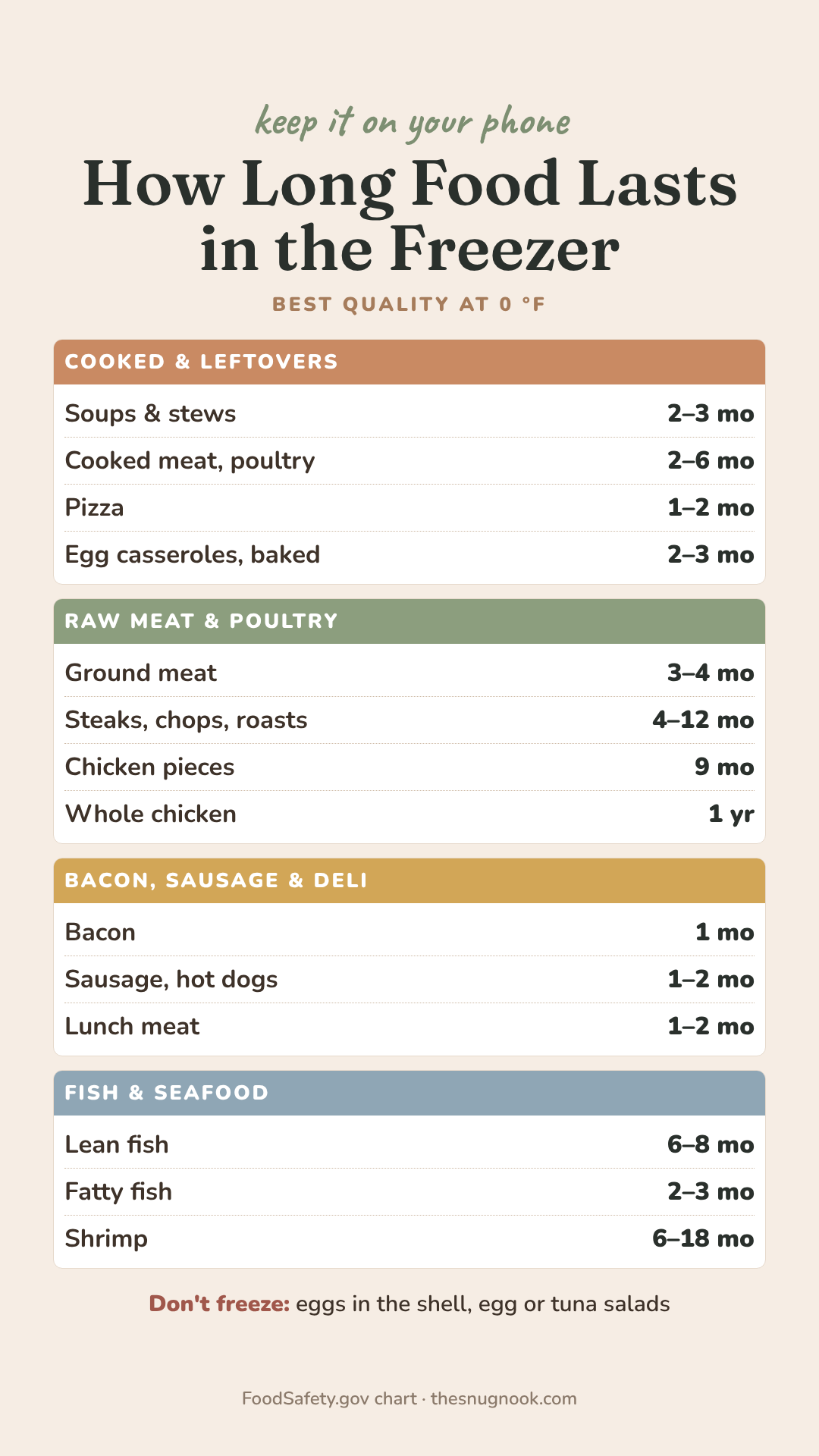
Pick the version that fits how you use it: a full Letter page with every time on this list and lines for your own notes, two half-page cards for the freezer door (cut along the dashed line), or a phone version to check at the store.
How long food lasts in the freezer
Times are for best quality in a freezer at 0 °F. When a range is given, the shorter time is a safe bet for the best taste.
Cooked meals and leftovers
| Food | Best within |
|---|---|
| Soups and stews | 2 to 3 months |
| Cooked meat or poultry | 2 to 6 months |
| Chicken nuggets or patties | 1 to 3 months |
| Pizza | 1 to 2 months |
| Egg casseroles, after baking | 2 to 3 months |
| Quiche, after baking | 2 to 3 months |
| Pumpkin or pecan pie, after baking | 1 to 2 months |
Raw meat and poultry
| Food | Best within |
|---|---|
| Ground beef, turkey, chicken or pork | 3 to 4 months |
| Steaks | 4 to 12 months |
| Chops | 4 to 12 months |
| Roasts | 4 to 12 months |
| Chicken or turkey pieces | 9 months |
| Whole chicken or turkey | 1 year |
| Fresh ham, uncooked | 6 months |
Bacon, sausage and deli meat
| Food | Best within |
|---|---|
| Bacon | 1 month |
| Raw sausage | 1 to 2 months |
| Fully cooked sausage | 1 to 2 months |
| Hot dogs | 1 to 2 months |
| Lunch meat | 1 to 2 months |
| Cooked ham, sliced or spiral cut | 1 to 2 months |
Fish and seafood
| Food | Best within |
|---|---|
| Lean fish, such as cod or flounder | 6 to 8 months |
| Fatty fish, such as salmon or tuna | 2 to 3 months |
| Shrimp | 6 to 18 months |
| Fresh crab or lobster meat | 2 to 4 months |
| Shucked clams, mussels or scallops | 3 to 4 months |
Eggs
| Food | Best within |
|---|---|
| Raw yolks and whites, beaten together | 12 months |
| Store-bought eggnog | 6 months |
Source: FoodSafety.gov: Cold Food Storage Charts
What not to freeze
- Raw eggs in the shell. Beat the yolks and whites together first, then freeze.
- Hard-cooked eggs.
- Egg, chicken, ham, tuna and macaroni salads. They do not freeze well.
- Custard and chiffon pies.
How to freeze food safely
- Keep the freezer at 0 °F or colder. At that temperature food stays safe; only taste and texture slowly fade.
- Cool food quickly before freezing. Spread it into shallow containers instead of putting a hot pot straight in.
- Leave a little room in containers for soups and sauces. Liquids expand as they freeze.
- Thaw in the refrigerator, in cold water or in the microwave, never on the counter. Food thawed in cold water or the microwave should be cooked right away.
- Reheat to 165 °F, checked with a food thermometer.
Learn more: USDA: Freezing and Food Safety · USDA: The Big Thaw · FoodSafety.gov: Cold Food Storage Chart
A simple freezer routine
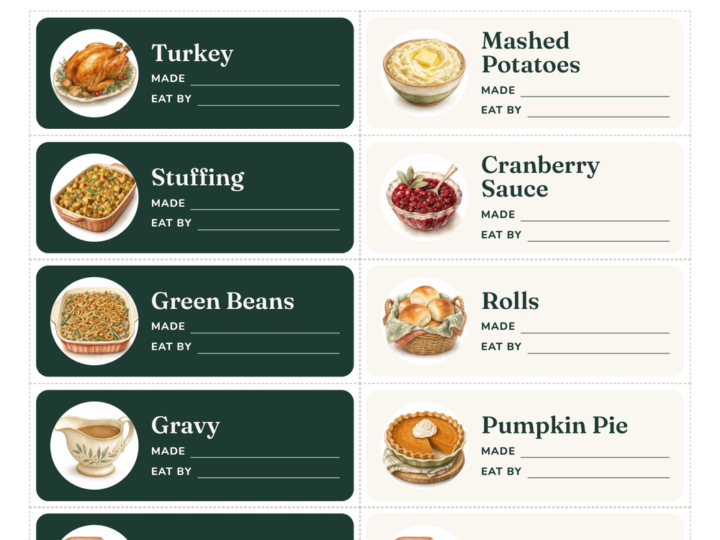
- Label everything. Write what it is and the date on every bag or container before it goes in.
- Newest to the back. Put fresh packages behind the older ones, so the oldest food is the first thing you see.
- Keep a list on the door. Write each item down when it goes in and cross it off when it comes out. Our free freezer inventory sheet is made for this.
- Check once a month. Look at the list, find what is close to the end of its time and plan a meal or two around it.
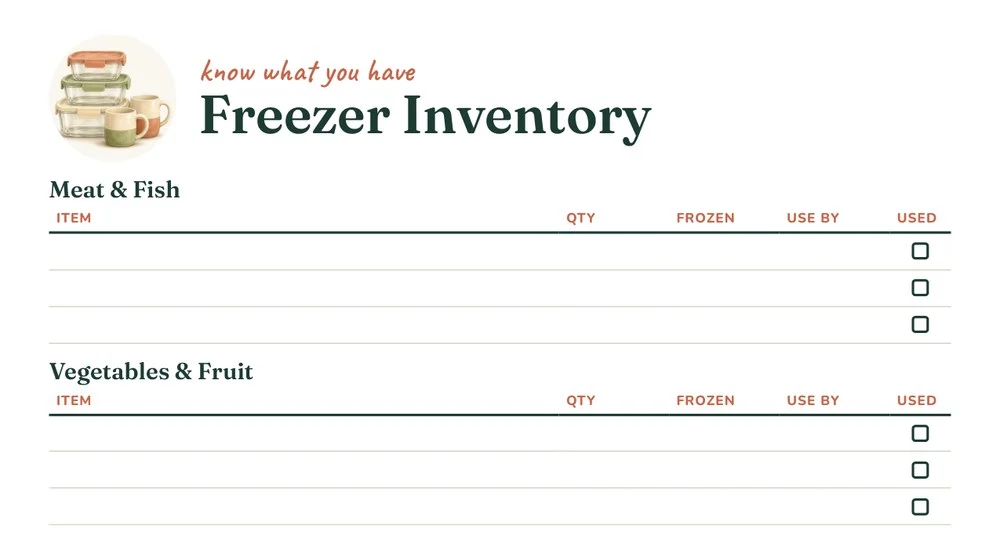
from our shop
Want a fuller system? Our Pantry, Fridge & Freezer Inventory set tracks all three spots in one place, with shopping list pages.
Made by us · sold on Creative Fabrica · affiliate link
Quick answers
Is food in the freezer safe forever?
Food kept frozen at 0 °F or colder the whole time stays safe, but its taste and texture slowly fade. That is why the chart gives times for best quality.
Does freezer burn make food unsafe?
No. Freezer burn is dry, discolored patches where air reached the food. It is a quality problem, not a safety one: cut those spots away before or after cooking. Wrapping food tightly helps prevent it.
Can I refreeze food I thawed?
Food thawed in the refrigerator can go back in the freezer without cooking, though it may lose some quality. Food thawed in cold water or in the microwave should be cooked before you freeze it again.
What temperature should my freezer be?
0 °F (-18 °C) or colder. A cheap appliance thermometer is the easiest way to check.